

Why Your Body Needs Vitamin M – Movement!
By Debbie Wyer on 20 November 2026
"We've gone from having to move to needing to move."
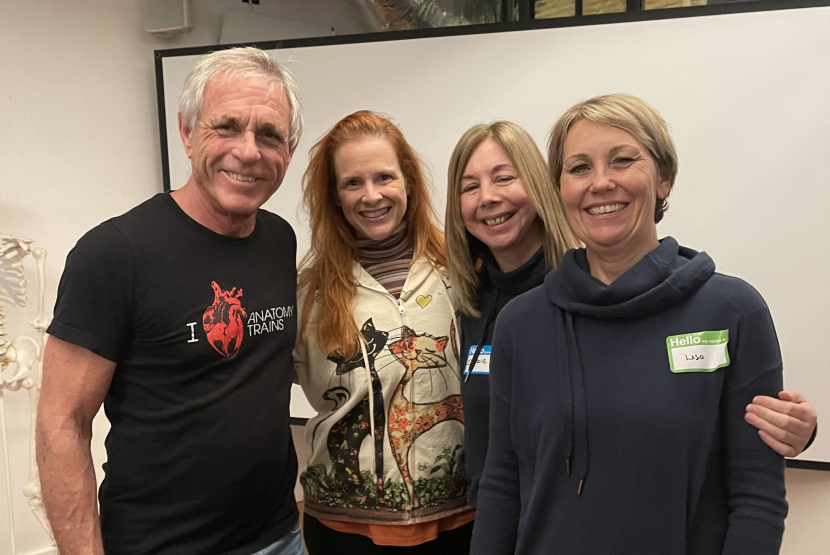
This was one of the statements that really stayed with me during a fascinating two-day workshop with Tom Myers, the creator of Anatomy Trains, a system that explores how muscles and fascia connect throughout the body and influence our posture and movement.
And when you stop and think about it, he's absolutely right.
Not so many generations ago, movement was naturally part of everyday life. People walked more, carried things, worked physically, bent, reached, lifted and regularly moved their bodies in different ways.
Today, so much of our lives is designed around convenience. We drive rather than walk, sit at desks, spend hours looking at screens and often find ourselves in the same positions for much of the day.
We've made life easier in so many ways, but we've also removed much of the movement that used to happen naturally and our bodies are incredibly good at adapting to whatever we regularly ask them to do.
Your body adapts to the life you live
One of the things we explored during the workshop was how our everyday habits, posture, environment and experiences can influence the way we move and hold ourselves.
If we spend hours sitting, certain muscles and tissues may become less accustomed to moving through their full range. If we regularly look down at our phones or computers, our neck and shoulders may begin to feel the effects.
And it's not just our physical habits that influence us.
Think about what happens when you're stressed, anxious or rushing around. Perhaps your shoulders creep up towards your ears, your jaw tightens or you find yourself holding tension through your abdomen.
Our breathing can change too, often without us even realising it.
Our bodies are constantly responding to what we're doing and what's happening around us and over time, repeated patterns can influence how freely and comfortably we move.
This is one of the reasons I find the relationship between fascia, movement and the nervous system so fascinating. Rather than thinking about individual muscles working independently, we can begin to appreciate how movement involves connections throughout the body. Or look at the body in a completely different way one fascial web with 600 fascial pockets (muscles).
Vitamin M – something we all need!
Tom referred to movement as Vitamin M, which I absolutely love. We all know our bodies need a variety of nutrients to stay healthy, but they also need a variety of movements and this doesn't necessarily mean doing more exercise.
You might attend Pilates twice a week, go to the gym or enjoy a regular yoga class, which is wonderful. But what happens during the rest of your week?
If we spend most of our day sitting, our bodies are still spending a significant amount of time in a relatively limited range of positions.
Movement doesn't have to mean a structured workout. Walking, reaching, bending, rotating, balancing, getting up and down from the floor and even changing how we sit can all introduce variety into our day and variety is important because our bodies need to be able to respond to different demands.
It's easy to fall into familiar patterns, even when we exercise regularly. We tend to repeat the movements we're comfortable with and sometimes avoid those that feel more challenging, but exploring different movements, within our own abilities, helps us maintain a wider range of physical skills.
Why this matters even more as we get older
As we move through our 40s, 50s, 60s and beyond, maintaining muscle strength becomes increasingly important.
We naturally tend to lose muscle mass and strength as we age, particularly if we aren't regularly challenging our muscles. Hormonal changes around menopause can also influence muscle, bone and connective tissue health.
Strength is only part of the picture, we also need mobility, balance, coordination and the ability to respond when something unexpected happens.
Think about the everyday things we want to continue doing. Can you comfortably get down onto the floor and back up again? Reach overhead to put something away? Turn around to look behind you? Walk confidently over uneven ground? React if you unexpectedly trip or lose your balance?
These aren't necessarily things we think about when we're younger, but they're incredibly important for maintaining our independence and confidence as we age and this is why I believe movement should be about so much more than simply exercising to look a certain way. It's about being able to enjoy life and continue doing the things we love.
It's not always about doing more
One of the things I took away from the workshop was the importance of giving our bodies different movement experiences.
That doesn't mean we need to constantly push ourselves harder or add another exercise class to an already busy week. Sometimes it's about introducing a little more variety into what we're already doing.
Perhaps you take a different walking route with some hills, practise balancing on one leg, or spend a few minutes exploring gentle rotations and reaching movements.
Strength training is important, but so is giving our bodies opportunities to move in different directions and at different speeds.
In my own week, I enjoy a mixture of Pilates, yoga, weight training, aerial hoop and, of course, MELT. They all challenge my body in different ways, and I love that there's always something new to learn or improve.
And I certainly don't get everything right! But I think continuing to challenge ourselves, while also listening to our bodies, is incredibly valuable.
Bringing Vitamin M into everyday life
One of the things I love about teaching is helping people realise that the movements we explore in class aren't just about becoming better at Pilates.
We're building body awareness, strength, mobility, coordination and balance that we can take into everyday life.
Whether we're using MELT to explore how our bodies feel, Pilates to develop strength and control, or TRX to challenge our balance and stability, the aim is to help our bodies move with greater confidence.
So perhaps the next time you think about exercise, also think about how much variety there is in your movement throughout the day.
Are you spending long periods in the same position? Are there movements you've gradually stopped doing? Could you introduce a little more walking, reaching, bending or rotating?
Movement doesn't need to be complicated, but it does need to be part of our lives.
Because getting older doesn't mean we have to stop getting stronger, learning or exploring what our bodies can do.
Understand your body. Move with confidence. Thrive for life.
At Debbie Wyer Pilates, you’ll find thoughtful movement, expert guidance and a welcoming space to help you feel stronger, more comfortable and more confident in your body — through Pilates, MELT, meditation and wellbeing.
Latest Blog Posts
- Why Your Body Needs Vitamin M – Movement! 20 November 2026
- Lower Body Compression - Back Thigh, Calf & Inner Thigh 02 October 2026
- Back to Basics: How Breath, Sound and Subtle Movement Help Us Connect With Our Body 24 September 2026
Useful Links
2026 © All Rights Reserved. Powered by V-Healthy. Privacy Policy | Terms of Service